


At an event hosted by the Institute for Government over 10 years ago, Economist Sharon White described Britain as one of the most centralised states in the developed world. Successive governments have promised to fix it and, so far, every single one has failed.
The consequences are visible not merely in constitutional arrangements but in economic outcomes. Consider what the 2026 Cities Outlook Report tells us about what actually works. In a decade of national economic stagnation — disposable incomes up just 2.4 per cent since 2013, barely worth measuring — a handful of places managed to do genuinely better: living standards rising more than twice as fast, residents thousands of pounds better off in real terms. Barnsley. Doncaster. Wakefield. Not glamorous cities. Not tech clusters or university boom towns. Northern towns that turned local economic growth into actual income gains for residents. Meanwhile, plenty of places with booming GVA figures — Cambridge, notably — saw real disposable incomes fall.
The standard diagnosis — levelling up, rebalancing, the Northern Powerhouse, whatever the current rebrand is — treats the problem as one of resources: if only we could redirect enough investment northward, the geography would fix itself. It won't. Manchester shows why.
Manchester’s advocates point to a city-region economy exceeding £100 billion, with a consistent 3.1% annual growth rate (double the UK average), a serious institutional architecture in the Greater Manchester Combined Authority, and the Bee Network as tangible proof that meaningful devolution produces results. All of that is true, though the critics are also right that living standards in Greater Manchester’s most deprived communities are still lagging. The growth is real; whether it reaches everyone is still a work in progress. That’s an argument for doing devolution better and more completely, not for retreating from it.
And let’s be clear about what devolution actually means. This is not inherently an argument for less government, nor a case for Whitehall to step back and let markets sort out the North. Economic growth is fundamentally local. A civil servant in a Whitehall office does not know that a particular bus route is why a firm can’t recruit from a particular neighbourhood. The local mayor does. The OECD has long emphasised that agglomeration effects only materialise when cities can coordinate transport, housing, skills and infrastructure at a regional level. Active government is essential; the question is which level of government should be acting, and on what.
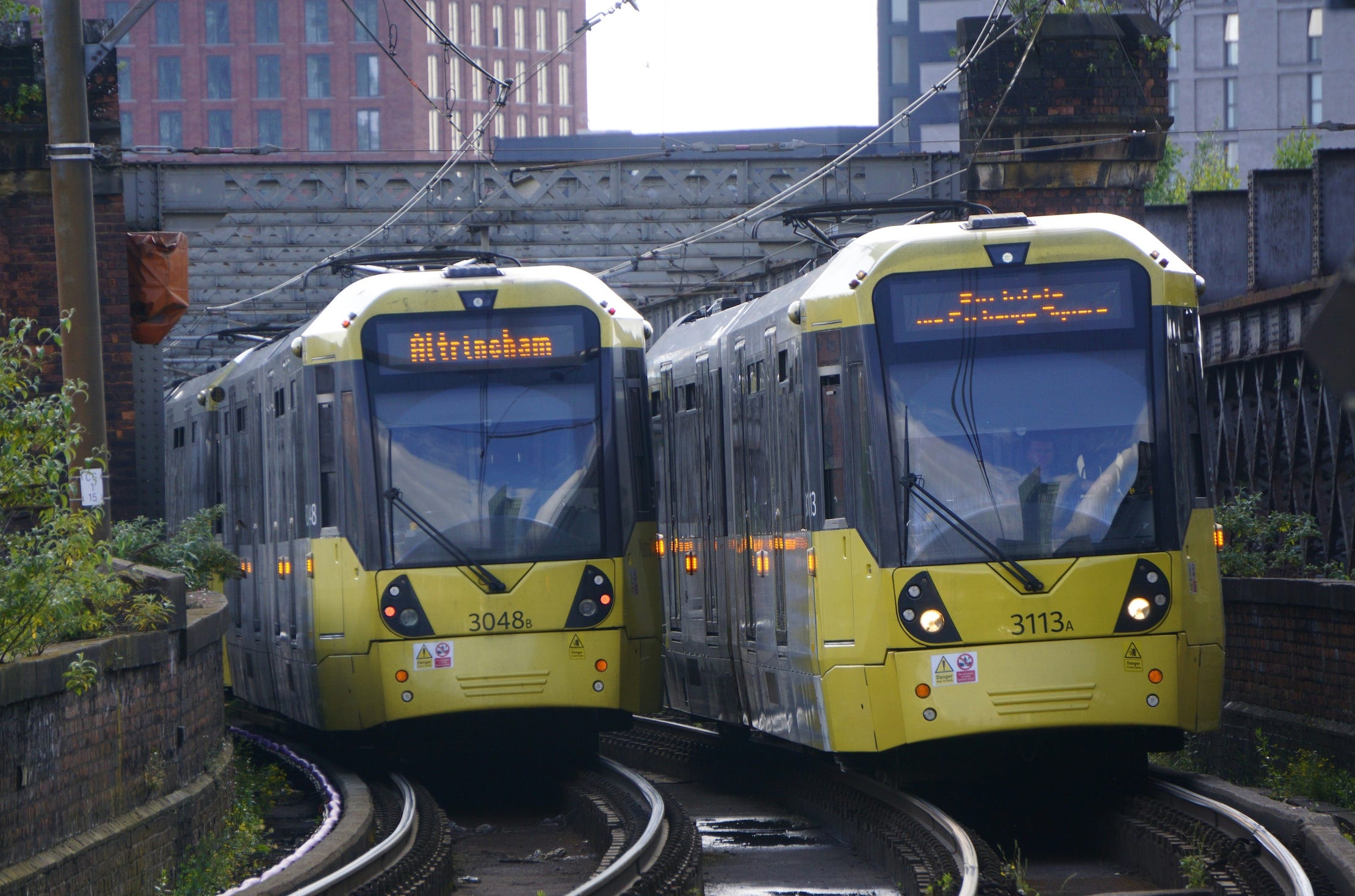
The Bee Network is the clearest example. Using devolved transport powers, Greater Manchester is building the first fully integrated public transport system outside London: buses, trams, cycling, and eventually local rail under a single network, with coordinated fares and coherent branding. Disconnected transport is one of the most reliable mechanisms for locking low-income workers out of opportunity. London has had integrated transport governance for decades. The idea that Manchester having it too is somehow radical or experimental is a kind of institutional provincialism that stands in the way of economic growth.
But cities cannot build everything alone. Rail connectivity between Manchester, Leeds, Sheffield and Liverpool is not a local question but a national one, and here the central state’s record is disappointing. HS2’s northern leg was cancelled. The government promised the saved money would go into alternative rail upgrades; most of it didn’t. Labour’s January 2026 Northern Powerhouse Rail announcement is better than nothing — a new Liverpool-Manchester line, upgrades at Leeds and elsewhere — but with no formal cost estimate and completion dates sliding into the 2030s, it is a commitment whose ambition is inversely proportional to its urgency. The North has been promised better railways for thirty years.
The devolution argument and the national infrastructure argument are not in competition. They are making the same point. Cities can govern themselves. They cannot build north-south rail lines. Westminster’s job is not to micromanage local planning decisions in Leeds; it is to deliver the strategic connective tissue that allows Northern cities to function as an integrated economic unit. The tragedy of British governance is that it does neither well: too controlling about the things cities should run, too irresolute about the things only the state can deliver.
Germany doesn't agonise over this. Munich governs Munich. Hamburg governs Hamburg. The federal government takes primary responsibility for strategic national infrastructure, while the Länder and municipalities exercise far greater autonomy over local affairs. The result is a national economy whose strength doesn't depend on one city and one postcode.
The truth is that Central government likes controlling the money. Whitehall officials like being the people who decide. Ministers like having patronage to dispense. Devolution requires those institutions to surrender power, something they are not incentivised to do voluntarily.
The much-needed Trailblazer Devolution Deals — expanded powers for Greater Manchester and the West Midlands — suggest that Westminster does occasionally grasp the logic. But Britain’s devolution settlement is still a patchwork of ad hoc deals extracted from a reluctant centre by politicians with enough clout to negotiate. The country outside of London deserves a system, not a series of exceptions.
A government that truly sought to boost economic growth would look at the Cities Outlook data — the towns translating growth into living standards, the cities with booming GVA but nothing in workers’ pockets, the stark variation in outcomes between regions — and conclude that locally-tailored policy, delivered by leaders with skin in the game and democratic accountability to local voters, beats uniform national prescription almost every time. It would then build a system that reflected this.
Britain keeps designing systems that don’t.
Let Manchester govern Manchester. Let Leeds govern Leeds. Let Liverpool, Sheffield and Newcastle shape their own economic futures. Build the railways and energy networks that bind those cities into a functioning national economy. Stop treating city autonomy as a reward for good behaviour, and stop treating national infrastructure as an aspiration for some future decade.
The data exists. The model exists. The only thing missing is a central government willing to admit that competence isn’t something it has a monopoly on.

I agree devolution is key to sustainable growth. But, it must be done with a transfer of costs as well as a transfer of power. Simply adding to local administrative costs without a pound for pound reduction in the bloated national government bill will result in the fruits of growth at the local level being squandered at the national level. MPs in Westminster will have to make tough choices which will not be in their own interests - something they were elected to do but in practice have a hard time doing it. Power ultimately corrupts.