


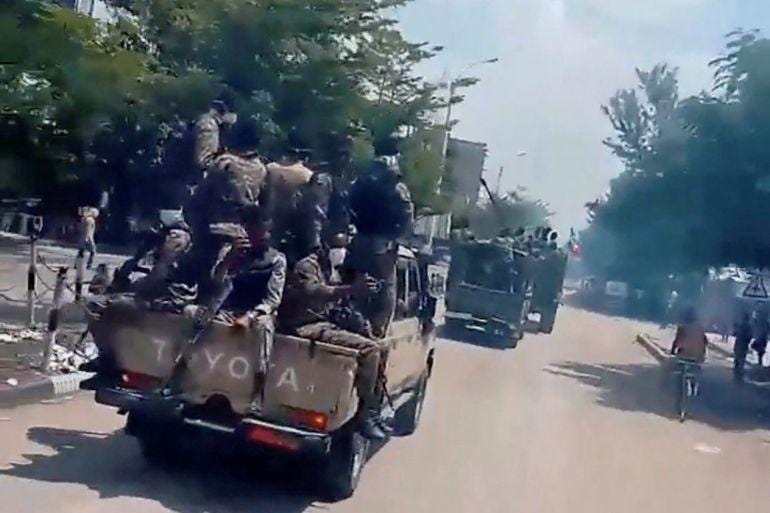
On the 28th of September, videos circulated showing Ethiopian government troops marching through Alamata, a large crossroads town in southern Tigray. By their side was the Tigray Peace Force, a splinter group siding with the government against their own region’s leaders. It is a striking image, and a telling one: even Tigrayans no longer agree on which side they are on.
Is this a new full-scale war? Yes, even the Vice-President of the Tigray People’s Liberation Front (TPLF) went from describing an “offensive” to a “full war” within a day. But this war is no longer just about the region itself: it is about the whole nation and its neighbours, ripping off the bandage Pretoria put on the wound.
The origins of this war lie in what ended the last one. The Pretoria Agreement was meant to be a ceasefire, a first step towards a real political settlement. But a deal is only as good as the trust behind it. Tigray was asked to disarm while the hardest questions were postponed, with nothing to guarantee Addis Ababa would ever answer them.
Worse, only two of the war’s four belligerents signed it. Eritrea and the Amhara militias who had fought alongside Addis Ababa were left out of the room, and both have since turned on Abiy Ahmed’s government, whilst Tigray’s own leaders split into rival camps. The result is the ‘Alliance for Survival’, which unites old rivals – the TPLF, Fano, and Oromo Liberation Army – under one banner.
The second problem is that Ethiopia’s internal war is now tangled up with a regional one. In late 2023, Abiy Ahmed declared that access to the Red Sea was an “existential” question for landlocked Ethiopia. His frustration is understandable: Ethiopia relies on Djibouti for over 95% of its trade, at a cost of more than a billion dollars a year. But his attention turned to Assab, an Eritrean port close to the border. Abiy insists he will not invade, but his neighbours are increasingly distrustful of his continued use of the “existential” argument.
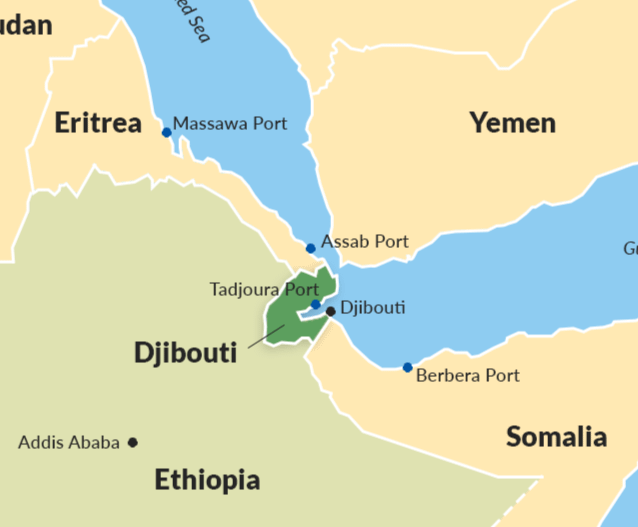
Just four years ago, Eritrea fought alongside Addis Ababa. Since then, relations have collapsed, Eritrea has mobilised its army, and Ethiopia now accuses it of funding the rebel alliance. Eritrea denies this, but there remains a clear incentive: a weak and divided Ethiopia is in no position to pursue its claim to the coast. Simultaneously, Sudan’s warring factions are each courting a different side, raising the risk of two wars feeding into each other.
The most probable outcome is neither a swift government victory nor a rebel advance on Addis Ababa, but a long war of attrition that neither side can win outright. The federal army retains a clear advantage in the air, drones proved decisive in the last war, and the recapture of Alamata shows it can still regain ground.
Yet, it is fighting on too many fronts at once. According to ACLED, a conflict monitor, the army was already stretched by insurgencies in Amhara and Oromia before fighting resumed in Tigray. The rebels face the opposite problem. Their alliance is united by little more than a common enemy, and its members still dispute control of western Tigray.
Some will argue that such a fragile coalition cannot last. They may well be right, but a divided opposition is precisely what prolongs a war: too weak to win, but too widespread to defeat. As before, civilians will be the ones to bear the cost. Communications across Tigray have already been cut, a reminder of the war in which an estimated 600,000 people died.
To ask whether Tigray is entering a new full-scale war is to look through too narrow a lens. What is unfolding today is not just a local conflict but a multi-front, regional crisis that threatens the entire Horn of Africa. Pretoria failed because it left half the combatants outside the room. Any new deal that repeats that mistake – excluding Asmara, the Amhara, or Tigray’s rival factions – will be another bandage on the same wound. The horn has sounded; the question is whether anyone is listening.
